
214-376-4441

Risks of Carrying Large Amounts of Cash Through John Wayne Airport
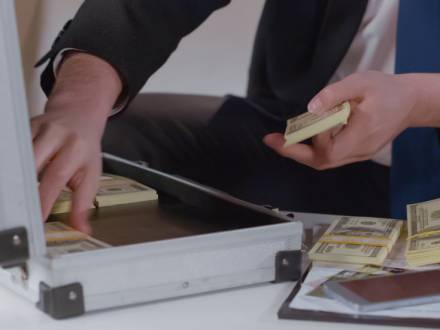
Carrying a large amount of cash through John Wayne Airport is legal. But that does not mean your money is safe from seizure. The biggest risk is not that you will be arrested, but that federal agents can seize the money and keep it without ever charging you with a crime. Civil asset forfeiture allows the government to take cash it believes is connected to criminal activity. But in a federal civil forfeiture case, the government must prove that the property is subject to forfeiture. If your cash was seized at the airport in 2026, our John Wayne Airport cash seizure defense lawyer can help you respond before the deadlines close.
Is It Legal to Fly With Large Amounts of Cash in the U.S.?
Flying with cash is legal, and no law caps the amount on a domestic flight. International travel works differently. Under 31 U.S.C. § 5316, you must file a report if you bring more than $10,000 in cash or certain other forms of money into or out of the United States. Failing to file, or structuring the transportation of money to avoid the reporting requirement, is itself a federal offense. It gives the government a basis to seize the money involved.
On a domestic flight, there is no similar reporting requirement. However, law enforcement can still seize cash if agents have probable cause. This means they have a reasonable basis to believe the money is connected to criminal activity. They can then pursue forfeiture under federal law.
How Do Airport Cash Seizures Actually Happen?
Cash seizures can begin at a TSA checkpoint when a screener discovers money and contacts law enforcement. TSA may screen large amounts of cash for security reasons and may report suspected criminal activity to law enforcement.
From there, a local officer or a federal agent, often from the DEA or Homeland Security Investigations, can arrive to ask questions. The conversation usually feels voluntary and informal. Agents ask where you are going, why you have the money, where it came from, and whether you would mind if a dog sniffs the bag.
A dog alert often provides the stated basis for seizure. However, those alerts can carry less weight than agents suggest, because currency in general circulation frequently carries detectable drug residue.
Certain travel patterns attract attention. One-way tickets, flights booked shortly before departure, destinations considered source cities for drug trafficking, cash wrapped in rubber bands or plastic, and nervous answers all appear in seizure reports.
What Happens After the Government Seizes Your Cash at an Airport?
After taking your cash, the agency gives you a receipt and keeps the money. You’re usually free to board your flight. The government then sends a notice of seizure, generally within 60 days, stating what was taken and explaining your options.
You can file an administrative claim. After you file a timely claim, the government usually has 90 days to act. It must file a forfeiture case, return the money, or take steps to pursue criminal forfeiture. You can file a petition for remission or mitigation, which asks the agency to return some or all of the money. You can do nothing, in which case the property is forfeited administratively, and the matter ends.
The deadlines in that notice are strict, and missing them can cost you the money permanently regardless of how the cash was earned. Responding to the wrong option can also waive rights you would rather keep, which is why these notices are worth reviewing with an attorney rather than answering on your own.
Can the Government Keep Your Money After an Airport Cash Seizure Without Charging You?
The government can keep money seized at an airport without charging anyone. Civil forfeiture cases are against the property rather than a person. That means you are not a defendant in the forfeiture case. Your money is.
Because the case is civil, the government does not have to prove its case beyond a reasonable doubt. The government must show that the cash is more likely than not connected to criminal activity.
Federal law also allows some claimants to raise an innocent owner defense. This can apply when you owned the money but did not know about the conduct that made it subject to forfeiture, or when you took reasonable steps to stop that conduct after learning about it. The government has the initial burden of proving the property is subject to forfeiture, while you have the burden of proving the innocent owner defense.
Schedule a Free Consultation With Our John Wayne Airport Cash Seizure Defense Attorney
Attorney Arnold Spencer has more than 30 years of legal experience. He’s a strong trial lawyer and litigator. That experience matters when challenging the government’s reasons for keeping your money. Being prepared to make the government prove its case in court can help you fight for its return. The fastest route to recovering seized money is a credible willingness to make them prove their case in court rather than waiting for an agency to reconsider.
Contact Spencer & Associates at 214-376-4441 to talk to our John Wayne Airport asset forfeiture defense lawyer today.


From our office in Dallas, we provide representation for clients in Dallas County, Tarrant County, across the state of Texas, and nationwide. We serve clients in Houston, Arlington, Irving, Grand Prairie, Euless, Aledo, Mansfield, North Richland Hills, University Park, Highland Park, Richardson, Addison, Carrollton, Farmers Branch, Bedford, Hurst, River Oaks, White Settlement, Haltom City, Forest Hill, El Paso, Lubbock, Odessa, and Laredo.
Results listed are not a guarantee or indication of future case results.
4849 Greenville Avenue, Suite 1380, Dallas, TX 75206
214-376-4441

Contact Our Firm
 The use of the Internet or this form for communication with the firm or any individual member of the firm does not establish an attorney-client relationship. Confidential or time-sensitive information should not be sent through this form.
I have read and understand the Disclaimer and Privacy Policy.